Are Supplements FDA Approved? What That Means for What You Buy
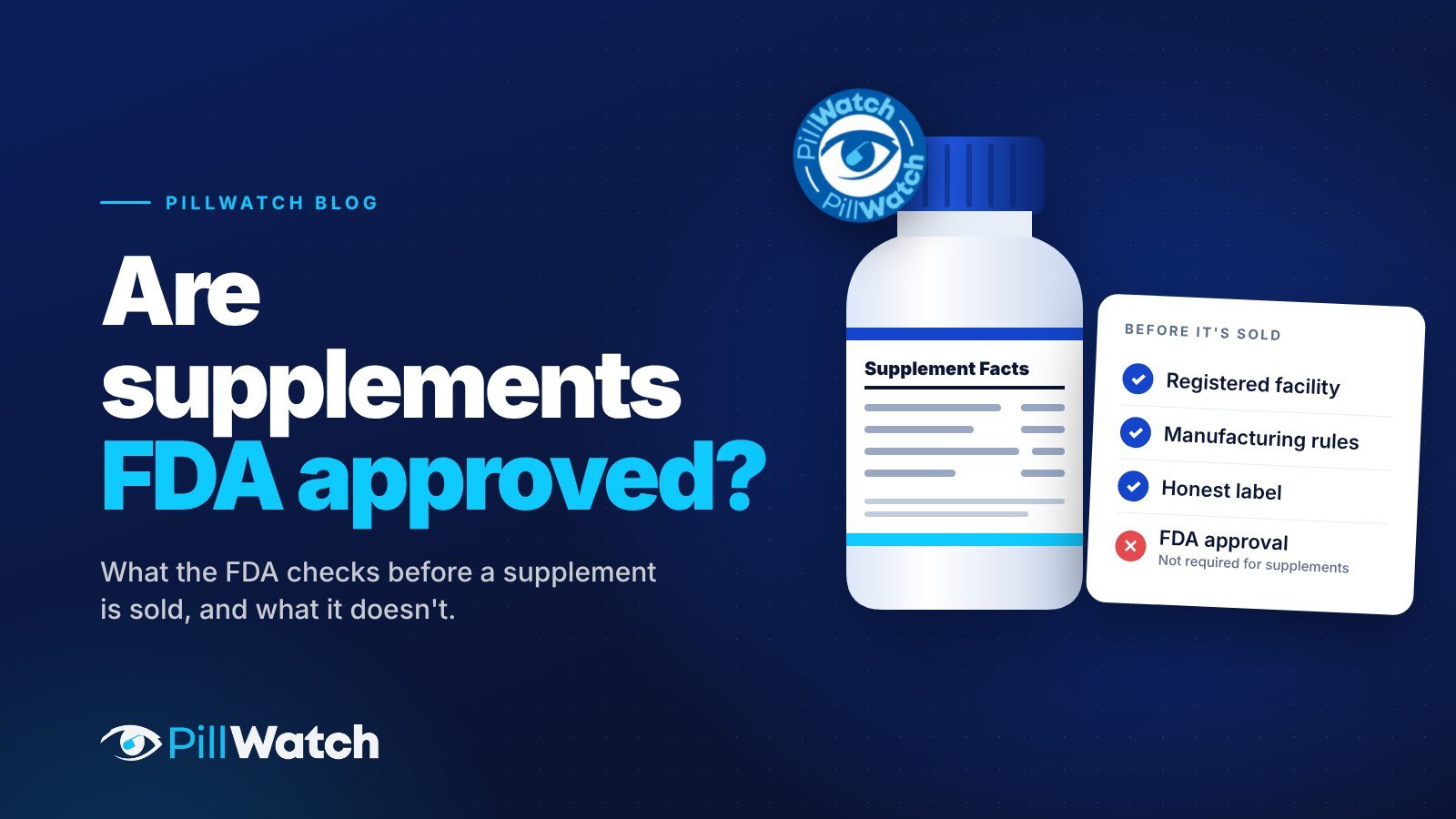
No. The FDA does not approve dietary supplements before they go on sale. A vitamin, protein powder or herbal capsule can reach store shelves and online marketplaces without the FDA reviewing it first. That surprises a lot of people, because supplements sit right next to medicines in the pharmacy aisle.
This doesn't mean supplements are unregulated. It means the rules work differently, and most of the responsibility sits with the company that makes and sells the product. Here's how that works and what you can check yourself.
Why the FDA doesn't approve supplements
Supplements are regulated under a 1994 law called the Dietary Supplement Health and Education Act (DSHEA). Under that law, supplements are treated as a category of food, not as drugs.
Prescription and over-the-counter drugs have to prove they are safe and effective before they can be sold. Supplements don't. In the FDA's own words, it "does not have the authority to approve dietary supplements before they are marketed." The FDA also generally doesn't approve what a supplement's label says.
Instead, the manufacturer and the distributor are responsible for making sure a product is safe, contains what the label says, and is labeled honestly. The FDA steps in after a product is already on the market.
What the FDA does require
"Not approved" is not the same as "no rules." Supplement companies still have legal requirements:
Manufacturing standards. Supplements must be made under current Good Manufacturing Practices (cGMP), set out in 21 CFR Part 111. These rules cover identity, purity, strength and composition. Facility registration. Facilities that make, pack or hold supplements for U.S. sale must register with the FDA before they start operating. New ingredient notices. A company using a "new dietary ingredient" generally has to notify the FDA at least 75 days before selling it, with evidence the ingredient is reasonably expected to be safe. Honest labeling. A supplement can't claim to treat, cure or prevent a disease. If a label makes a claim about how the product affects the body, it must carry this disclaimer: "This statement has not been evaluated by the Food and Drug Administration. This product is not intended to diagnose, treat, cure, or prevent any disease." Reporting serious side effects. Companies must record and forward serious adverse event reports to the FDA, and the label must list a U.S. address or phone number for reporting them.
After a product is on the market, the FDA can inspect facilities, examine imports, investigate complaints, issue warnings and push for recalls.
"FDA registered" is not "FDA approved"
You'll often see phrases like "made in an FDA-registered facility" on supplement labels and product pages. That only means the facility filed its registration with the FDA, which every supplement facility selling into the U.S. is required to do. It is not an inspection result, a certification or an approval.
If a supplement says it is "FDA approved," treat that as a red flag. The FDA doesn't approve supplements, so the claim is at best misleading.
Where problems slip through
Because there's no review before sale, problems are usually caught after people have already bought the product. Some of the most serious cases involve products sold as supplements that secretly contain prescription drug ingredients.
A 2018 study in JAMA Network Open looked at FDA warnings from 2007 to 2016 and found 776 products marketed as dietary supplements that contained hidden drug ingredients. Most were sold for:
Sexual enhancement (about 46%), most often containing sildenafil, the active ingredient in Viagra Weight loss (about 41%), most often containing sibutramine, a drug pulled from the U.S. market in 2010 Muscle building (about 12%), most often containing steroids or steroid-like ingredients
Counterfeits are another risk. A copycat product can use the same name and nearly the same packaging as a real brand, then show up through third-party sellers on large marketplaces. From the listing alone, it can be hard to tell the difference.
How to check a supplement before you buy
You don't need a lab to lower your risk. A few minutes of checking goes a long way:
Buy from the brand or an authorized seller. On marketplaces, check who the seller is, not just the product name. A brand's own website usually lists where its products are sold. Read the label. Look for a Supplement Facts panel, a full ingredient list, a lot number, an expiration date and a U.S. address or phone number. Be wary of products that skip these. Watch for drug-like promises. Claims to cure a disease, work "instantly," or replace a prescription are warning signs, especially for sexual enhancement, weight loss and bodybuilding products. Check for recalls. Search the product or company on our supplement recalls page, which pulls in FDA recall data and FDA safety alerts. Verify any seal you see. A seal printed on a label is only as good as the organization behind it. Real seal programs let you look a product up. For the PillWatch Seal, enter the seal ID on our verify page. Report problems. If a supplement makes you sick, talk to a doctor and report it through the FDA's Safety Reporting Portal.
Our guide on how to spot counterfeit supplements online goes deeper on checking sellers and packaging.
Where the PillWatch Seal fits
Since the FDA doesn't review supplements before sale, independent programs fill some of the gap. Each one answers a different question. Some test what's in the bottle, some audit manufacturing, and some check where a product comes from.
The PillWatch Seal focuses on sourcing. We review documents showing that a brand's products come from licensed manufacturers and distributors, then keep checking marketplaces for problems after the seal is issued. Every sealed product has a public page where shoppers can confirm the seal is real and active.
To be clear about what it isn't: the PillWatch Seal is not FDA approval, and it doesn't mean a supplement is right for you. You can read exactly what we check, and our guide on what a supplement seal can and can't tell you explains how different seals compare.
Frequently asked questions Does the FDA test supplements?
Not before they're sold. The FDA doesn't test supplements before they reach the market. It can sample and test products afterward, usually when investigating a complaint, an import or a safety concern.
Is it legal to sell a supplement the FDA hasn't approved?
Yes. Supplements don't need FDA approval to be sold legally in the U.S. They do need to be safe, made under good manufacturing practices and labeled honestly.
What does "FDA registered" mean on a supplement?
It means the facility that made or packed it registered with the FDA, which is required for all of them. It doesn't mean the FDA reviewed, inspected or approved the product.
How can I tell if a supplement has been recalled?
Search the product or brand name on our recalls page or on the FDA's recalls page. Recalls list affected lot numbers, so compare them with the lot number on your bottle.
This article is for general information and isn't medical advice. Talk with a doctor or pharmacist before starting a supplement, especially if you take prescription medicine.
Sources: FDA: Questions and Answers on Dietary Supplements · 21 CFR Part 111 · Tucker et al., JAMA Network Open, 2018
The PillWatch Seal shows shoppers your products come from licensed sources.